

Spinal Decompression Therapy for Neck Pain:
A Non-Surgical Solution for Cervical Disc Pain — Before You Consider Surgery
If you're living with ongoing neck pain, a herniated disc in your neck, radiating arm pain, or tingling fingers that disturb your sleep — you understand how much it impacts every part of your life. Turning your head while driving, sitting at a desk, or even sleeping comfortably can seem impossible. And when standard treatments such as physiotherapy, rest, and medication no longer work, surgery may start to feel like the only remaining option.
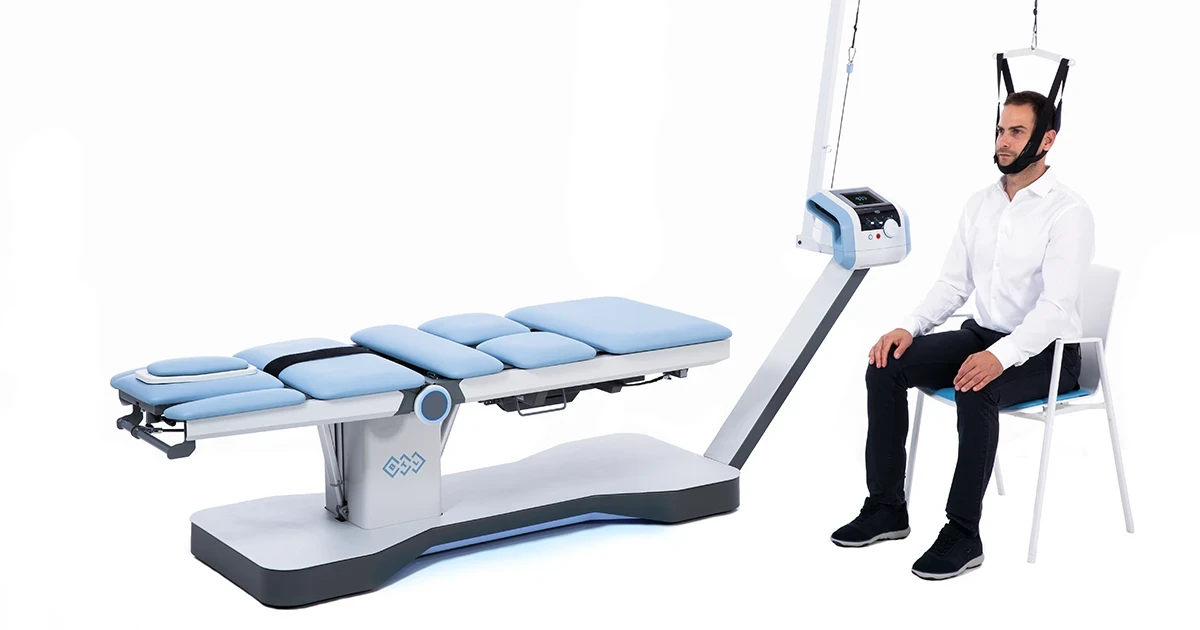
But there's a vital, evidence-based step that many neck pain sufferers overlook: spinal decompression therapy. At Spectrum Healthcare in North Ryde — conveniently located near Macquarie Park, Ryde, Meadowbank, and the Macquarie Centre — we provide one of Sydney's most advanced non-surgical neck pain treatments. We’re proud to be among the few clinics in Australia equipped with the latest BTL Spinal Decompression table — a cutting-edge device that delivers precise, computer-controlled decompression targeted exactly at your affected cervical discs.
Understanding Neck-Related Disc Pain and Cervical Conditions
The cervical spine — the seven vertebrae forming your neck — is one of the most mobile and vulnerable parts of the body. Between each vertebra sits an intervertebral disc: a cushioning structure with a tough outer ring (annulus fibrosus) and a gel-like centre (nucleus pulposus). These discs absorb shock and enable the wide range of motion your neck performs daily.
When a cervical disc is damaged — through injury, age-related wear, poor posture, prolonged desk work, or repetitive strain — several painful conditions can develop. These are among the most commonly searched neck pain conditions across Sydney and Australia.
Cervical disc herniation (slipped disc in the neck): The disc bulges or ruptures outward, pressing on nearby nerves or the spinal cord. Symptoms include neck, arm, and shoulder blade pain, as well as hand weakness or numbness.
Bulging disc in the neck: A disc that protrudes beyond its normal boundary without fully rupturing, often causing nerve compression symptoms similar to a complete herniation.
Degenerative disc disease (cervical): Age-related or wear-and-tear breakdown of the disc --- it loses height and hydration, narrowing the space between vertebrae and increasing pressure on nerves.
Cervical radiculopathy (pinched nerve in the neck): Pressure on a nerve root results in sharp or burning pain, numbness, and tingling that radiate from the neck into the shoulder, arm, or hand --- sometimes described as a shooting electric pain down the arm.
Cervical stenosis: Narrowing of the spinal canal presses on the spinal cord, causing symptoms in the arms and legs, balance issues, and in severe cases, weakness.
Tech neck and postural disc pain: Growing more common with extended screen time, forward head posture speeds up disc compression and can lead to chronic neck pain, headaches, and early degeneration.
All of these conditions share a common factor: abnormal mechanical pressure on spinal structures. Relieving that pressure — not merely masking the pain — is the key to lasting neck pain relief.

What Is Spinal Decompression Therapy? How Does a Decompression Table Work?
Spinal decompression therapy is a non-surgical, non-invasive treatment that uses a motorised, computer-controlled table to apply precisely calibrated traction to the cervical spine. Unlike traditional manual traction — which applies a static pulling force the body often resists — modern computerised decompression tables (such as the BTL Spinal Decompression table used at Spectrum Healthcare, North Ryde) utilise sophisticated software to cycle between distraction and relaxation phases. This rhythmic, pulsed method is essential: it stops the body's natural guarding reflexes from triggering, allowing the spine to gently and gradually lengthen — creating a sustained negative intradiscal pressure that promotes real, measurable therapeutic change.
At Spectrum Healthcare in North Ryde, our BTL Spinal Decompression table assesses your body weight and specific diagnosis to automatically calculate and adjust the best treatment settings — providing personalised decompression precisely targeted to the affected cervical level. This level of accuracy is what differentiates modern decompression from older traction techniques.
The Key Benefits of Spinal Decompression for Neck and Cervical Disc Pain
Spinal decompression therapy offers a compelling set of benefits that make it one of the most effective non-surgical neck pain treatments available in Sydney today:
1. Non-surgical, non-invasive — zero downtime
There are no incisions, no anaesthesia, no hospital stay, and no recovery time. You walk in, get treated, and go back to your day. For patients looking for a non-surgical neck pain solution in North Ryde or Macquarie Park, decompression therapy offers real therapeutic benefits without the risks of cervical spine surgery.
2. Targets the root cause of your neck pain — not just symptoms
Anti-inflammatory medication and pain relief can temporarily hide cervical disc pain — but they do not tackle the herniation or compression that causes it. Spinal decompression physically alleviates the pressure on the damaged disc and nerve, targeting the structural cause of your pain.
3. Clinically proven pain relief for cervical radiculopathy and disc herniation
Clinical studies and patient outcomes consistently show significant reductions in neck pain, cervical radiculopathy symptoms, arm pain, and headaches after a structured course of spinal decompression therapy. Many patients see improvements within the first few sessions.
4. Restores mobility and quality of life
As disc pressure decreases and nerve irritation subsides, patients consistently report improved cervical range of motion — being able to look over their shoulder while driving, sleep comfortably on their side, and resume activities they had abandoned due to neck pain.
5. Promotes disc rehydration and long-term healing
The pumping action of decompression therapy pulls water, nutrients, and oxygen back into the damaged disc — supporting the disc's natural ability to regenerate. This can slow, and in some cases partly reverse, cervical degenerative disc disease.
6. Reduces reliance on pain medication
As neck pain and radiculopathy symptoms improve, many patients reduce or stop their use of NSAIDs, muscle relaxants, and opioid analgesics — avoiding the side effects and risks linked to long-term medication use.
7. Integrated care — not a standalone fix
At Spectrum Healthcare, spinal decompression is not performed in isolation. It is combined with physiotherapy, remedial massage, and targeted exercise rehabilitation — providing a comprehensive, multi-modal approach to neck pain recovery.
8. Significantly more cost-effective than cervical spine surgery
Cervical spine surgery—whether ACDF (anterior cervical discectomy and fusion) or disc replacement—incurs significant costs, time off work, post-operative rehabilitation, and risks such as nerve damage, failed fusion, and adjacent segment disease. A full course of spinal decompression therapy is a fraction of that cost—and for many patients, provides the same outcome: relief and restoration of function.
9. Advanced BTL technology — one of very few clinics in Australia
Spectrum Healthcare is proud to be among the few clinics in Australia using the latest BTL Spinal Decompression table. This technology assesses your body weight and specific diagnosis to deliver automated, personalised traction — far more precise and effective than older-generation decompression or manual traction devices.
Why You Should Trial Spinal Decompression Before Cervical Spine Surgery
If you've been told surgery is the next step for your neck disc pain, take a moment to think about this: cervical spine surgery — while sometimes necessary and life-changing in the right situations — involves genuine risks that are not always fully explained at the time of the surgical referral.
Risks of cervical spine surgery include: surgical site infection, damage to nearby nerves or the spinal cord, hardware failure, failed fusion, ongoing pain after surgery, adjacent segment disease (where the vertebrae above and below a fusion deteriorate more quickly), and a lengthy recovery period — often 3 to 6 months before fully returning to activity.
Spinal decompression therapy provides a structured, evidence-based, non-surgical alternative that avoids these risks. It is specifically designed to be tried before considering surgery — and for many patients with cervical disc herniation, bulging discs, and cervical radiculopathy, it offers the relief they hoped surgery would give.
Importantly, most neurosurgeons and spine specialists recommend patients try conservative treatments, including spinal decompression, before considering surgery. A referral for decompression therapy from your GP or specialist is a medically sound and commonly advised first step. If decompression does not provide enough relief, you are no worse off than before, and surgery can still be considered later with a clearer clinical picture to guide the decision.
What to Expect: Your Spinal Decompression Journey at Spectrum Healthcare, North Ryde
Step 1: Comprehensive Initial Assessment
Your first appointment begins with a comprehensive consultation. Our experienced clinicians will review your complete history, any imaging (X-ray, MRI, CT), neurological findings, and symptom profile to ensure that spinal decompression therapy is suitable for your specific cervical condition. We take patient selection seriously — if another approach is more appropriate, we will be upfront about that.
Step 2: Your First Decompression Session
You will be asked to lie fully clothed on the BTL Spinal Decompression table. A padded, ergonomic harness is securely fitted around the base of your skull and neck. Our clinician programs your personalised treatment settings — including the exact angle of cervical traction, the peak distraction force (calculated from your body weight and diagnosis), and the cycle timing.
Most patients describe the sensation as a gentle, rhythmic stretch — surprisingly relaxing. Each session usually lasts between 20 and 30 minutes. You must hold a safety switch at all times; if you experience any sharp or worsening pain, you can stop the table immediately. This is uncommon — the vast majority of patients find decompression comfortable from the very first session.
Step 3: Your Treatment Programme
A standard course of cervical spinal decompression at Spectrum Healthcare involves 12 to 20 sessions, typically structured as follows:
Weeks 1--2: More frequent sessions (3--5 per week) to build therapeutic momentum and reduce acute nerve irritation.
Weeks 3--4: Reducing frequency as symptoms stabilise and mobility improves
Weeks 5--6: Maintenance sessions alongside the introduction of targeted cervical rehabilitation exercises.
Ongoing: Periodic maintenance treatments to protect long-term disc health and prevent recurrence
Step 4: What You May Experience Between Sessions
After the first one or two sessions, mild muscle soreness is normal — similar to post-massage tenderness. This usually clears up within 24 hours. Most patients start noticing meaningful changes — reduced neck pain, better sleep, less arm tingling — within the first 2 to 3 weeks of treatment.
Step 5: Progress Review and Outcome Measurement
We regularly review your progress using objective outcome measures. If you respond well, we continue and adapt your programme. If, after a genuine trial of care, there is insufficient improvement, we collaborate with your GP and specialist to plan the most suitable next steps — which may include additional imaging, a pain management review, or a surgical consultation.
Who Is a Candidate for Spinal Decompression Therapy?
Spinal decompression is well-suited for patients experiencing:
Cervical disc herniation or slipped disc in the neck
Bulging disc in the cervical spine
Cervical degenerative disc disease
Cervical radiculopathy — pinched nerve causing arm or shoulder pain, numbness, or tingling
Neck pain that has not responded adequately to physiotherapy, chiropractic, massage, or medication
Neck pain accompanied by headaches originating from the upper cervical spine
Patients wanting to avoid or delay cervical spine surgery
Post-injury neck pain (e.g., whiplash-related disc damage)
Treatment is generally NOT appropriate for patients with:
Spinal fractures or significant cervical instability
Spinal cord tumours or active spinal infection
Severe osteoporosis
Advanced myelopathy requiring urgent surgical intervention
Pregnancy
Certain post-surgical spinal hardware (assessed on a case-by-case basis)
Your initial assessment at our North Ryde clinic will determine your suitability. We take a careful, evidence-based approach to patient selection — your safety always comes first.
Frequently Asked Questions About Spinal Decompression for Neck Pain
Q: Is spinal decompression therapy painful?
No. The vast majority of patients find cervical spinal decompression comfortable and relaxing. The BTL table applies gentle, rhythmic traction — never a sudden or forceful pull. You hold a safety switch at all times. Some mild muscle soreness after the first one or two sessions is normal and temporary, similar to post-exercise tenderness.
Q: How quickly will I notice relief from my neck pain?
Many patients with cervical disc herniation or radiculopathy notice some improvement within the first 2 to 4 sessions. More substantial and lasting pain relief usually develops over a 4 to 6 week programme. Outcomes vary depending on the severity and duration of your condition, as well as how dehydrated or damaged the affected disc is.
Q: How many spinal decompression sessions will I need?
A typical program includes 12 to 20 sessions. Your Spectrum Healthcare clinician will suggest a personalised schedule based on your specific cervical diagnosis, symptom severity, and how your body reacts to early sessions. We don't use a one-size-fits-all approach.
Q: Will the results of spinal decompression last?
For patients who complete a full programme and consistently follow through with home exercises, postural correction, and lifestyle modifications, outcomes are often long-lasting. Regular maintenance sessions — particularly for cervical degenerative disc disease — can greatly prolong these results. Avoiding behaviours that originally contributed to disc damage, such as prolonged screen posture and heavy neck loading, is equally crucial.
Q: Can I have spinal decompression if I've already had neck surgery?
This depends on the type of surgery and hardware involved. Some post-surgical patients are suitable candidates; others are not. Your clinician will review your surgical history and imaging carefully before recommending treatment. We work closely with your surgeon if needed.
Q: What is the difference between spinal decompression and regular traction or physio?
Traditional manual traction applies a steady force — the body's guarding response often diminishes its effectiveness. Modern computerised spinal decompression (such as the BTL table used at Spectrum Healthcare, North Ryde) utilises pulsed, software-controlled cycles of distraction and relaxation. This overcomes guarding reflexes and generates true negative intradiscal pressure — something regular traction or manual physio cannot reliably achieve. It is a fundamentally different and more effective mechanism.
Q: Is spinal decompression safe?
Yes. When performed on appropriately selected patients by trained clinicians, spinal decompression therapy has an excellent safety profile. It is non-invasive, requires no radiation, and carries none of the risks associated with cervical spine surgery, epidural injections, or long-term opioid or NSAID use.
Q: I've been told I need surgery for my herniated disc in my neck — is it too late for decompression?
Not at all. In fact, this is exactly when spinal decompression is most worth trialling. Unless your condition involves a neurological emergency (e.g., rapidly progressive weakness or loss of bladder/bowel control), a structured trial of spinal decompression therapy before surgery is a clinically reasonable and surgeon-supported approach. Many patients who have been referred for cervical fusion surgery have achieved sufficient relief through decompression to defer or avoid the operation entirely.
Q: Can I work and exercise while undergoing spinal decompression therapy?
In most cases, yes. Your clinician will advise on any temporary activity modifications. Light activity and gentle walking are generally encouraged; heavy lifting, contact sports, or high-impact exercise may need to be temporarily modified during the early phase of treatment.
Q: Does Medicare or private health insurance cover spinal decompression therapy at Spectrum Healthcare?
Coverage varies depending on your fund and level of cover. We suggest contacting your insurer before starting treatment. Our friendly reception team at North Ryde can help with relevant billing details to support your inquiry. Some patients access treatment through WorkCover or CTP insurance — please ask our team for more information.
Q: Where is Spectrum Healthcare located — and how do I book?
Spectrum Healthcare is located in North Ryde, easily accessible from Macquarie Park, Ryde, Meadowbank, West Ryde, Epping, Marsfield, Gladesville, and nearby Northern Sydney suburbs. You can book an initial spinal decompression assessment by calling our clinic or visiting our website at spectrumhealthcare.com.au.
Stop Searching — Start Recovering. Book Your Assessment Today.
If you're looking for neck pain relief, non-surgical cervical disc treatment, or spinal decompression therapy in North Ryde, Macquarie Park, or anywhere in Sydney's Northern District — Spectrum Healthcare is here to help.
Our experienced team combines advanced technology with truly personalised care. We don't believe in rushing patients into surgery when a safer, effective alternative is available. If spinal decompression is suitable for you, we will determine this at your very first appointment. If it isn't, we will honestly inform you and help you find the right way forward.
Stop Searching — Start Recovering. Book Your Assessment Today.
If you're looking for neck pain relief, non-surgical cervical disc treatment, or spinal decompression therapy in North Ryde, Macquarie Park, or anywhere in Sydney's Northern District — Spectrum Healthcare is here to help.
Our experienced team combines advanced technology with truly personalised care. We don't believe in rushing patients into surgery when a safer, effective alternative is available. If spinal decompression is suitable for you, we will determine this at your very first appointment. If it isn't, we will honestly inform you and help you find the right way forward.
Book your spinal decompression assessment
Serving: North Ryde · Macquarie Park · Ryde · Meadowbank · West Ryde · Epping · Marsfield · Gladesville · Northern Sydney
Disclaimer: This article is intended for general informational and educational purposes and does not constitute medical advice. Individual outcomes vary. Please consult a qualified healthcare provider to determine the most appropriate treatment for your specific condition. Spinal decompression therapy may not be suitable for all patients.